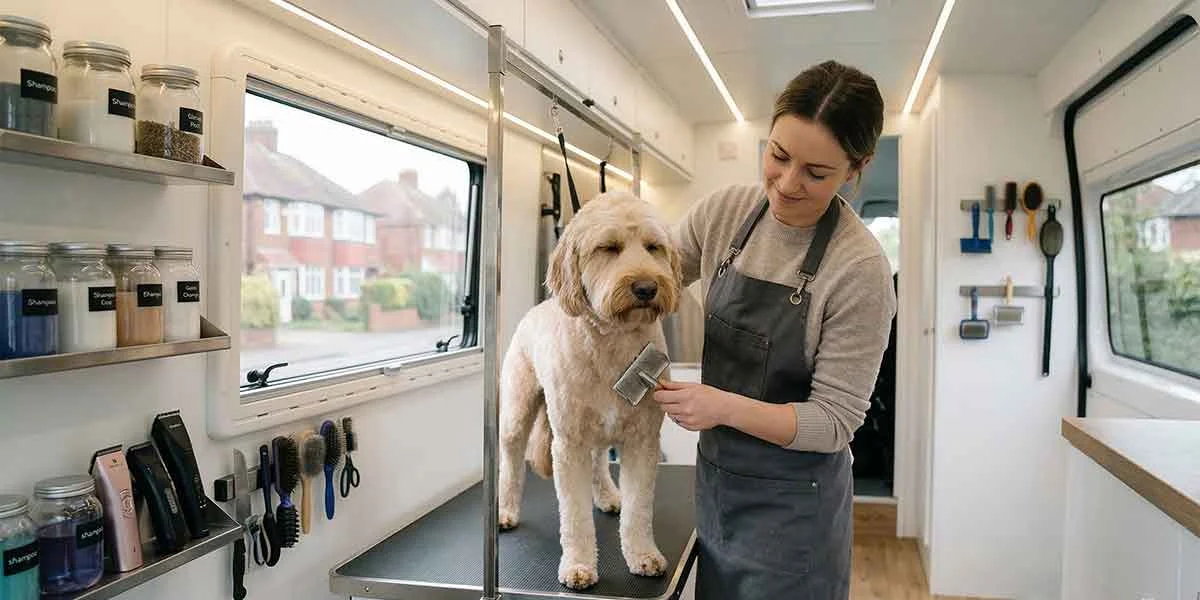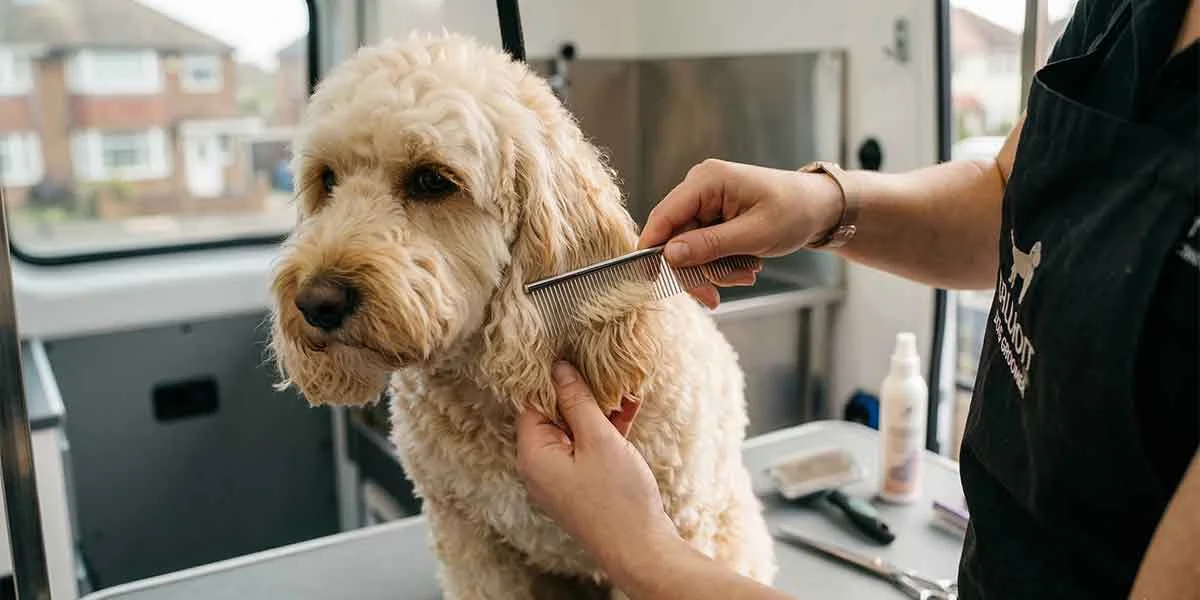
Cockapoos, Labradoodles, Goldendoodles, Cavapoos — the "doodle" crosses have taken the UK by storm. And it's easy to see why. They're friendly, intelligent, and have those irresistible teddy-bear coats. But those beautiful coats come with a responsibility that many new doodle owners aren't prepared for.
What Makes Doodle Coats Different
Most doodle crosses inherit a curly or wavy coat from their Poodle parent. Unlike a Labrador's short, self-maintaining coat, doodle coats grow continuously and don't shed in the traditional sense. Instead, loose hair gets trapped in the curls and tangles — and if it's not brushed out regularly, it forms mats.
Matting isn't just a cosmetic issue. It's a welfare concern.
What Matting Actually Does
When hair mats, it pulls tightly against the skin. Imagine wearing a jumper that's three sizes too small and getting tighter every day. That's what severe matting feels like for your dog. It restricts movement, causes pain, and can lead to:
- Skin irritation and sores — trapped moisture under the mats creates a breeding ground for bacteria
- Restricted blood flow — tight mats around legs and ears can cut off circulation
- Hidden parasites — fleas and ticks love to hide in matted coats where they can't be seen
- Pain and distress — every movement pulls on the matted hair, causing constant discomfort
How to Prevent Matting
The good news is that matting is entirely preventable with a simple routine:
Brush every 2–3 days. Use a slicker brush and work through the entire coat in sections. Pay special attention to behind the ears, under the legs, around the collar area, and the belly. These are the most common matting spots.
Use the right tools. A slicker brush for daily maintenance and a metal comb to check for tangles closer to the skin. If the comb glides through without catching, you're mat-free.
Book regular grooms. Every 6–8 weeks is ideal for doodle coats. This keeps the coat at a manageable length and ensures any developing tangles are caught early. Leaving it longer than 8 weeks is when problems start.
Dry thoroughly after baths and rain. Wet doodle coats mat much faster than dry ones. If your dog gets soaked on a walk, towel dry and brush through once they're dry.
What Happens When Matting Is Severe
When a matted dog comes to us, we always prioritise the dog's comfort and safety over the desired style. If matting is moderate to severe, the kindest option is almost always to clip the coat short — sometimes very short.
This isn't a cosmetic choice. Attempting to brush out severe matting is painful, stressful, and can damage the skin. Clipping the mats away is faster, pain-free, and allows the skin to breathe and heal. The coat will grow back — but the stress and pain of de-matting doesn't need to happen.
We understand it can be disappointing to see your fluffy teddy bear come out looking like a different dog. But a short, healthy coat is always better than a long, matted one that's causing your dog pain.
A Matting Surcharge May Apply
Grooming a matted coat takes significantly longer than a well-maintained one. The groomer needs to work slowly and carefully to avoid nicking the skin, and specialist blades may be required. For this reason, a matting surcharge may be added to cover the extra time and care involved.
The Key Takeaway
If you have a doodle, commit to regular brushing and regular grooming appointments. It's an investment in your dog's comfort, health, and happiness. And if you're ever unsure about your dog's coat condition, send us a photo or give us a call — we're always happy to advise.